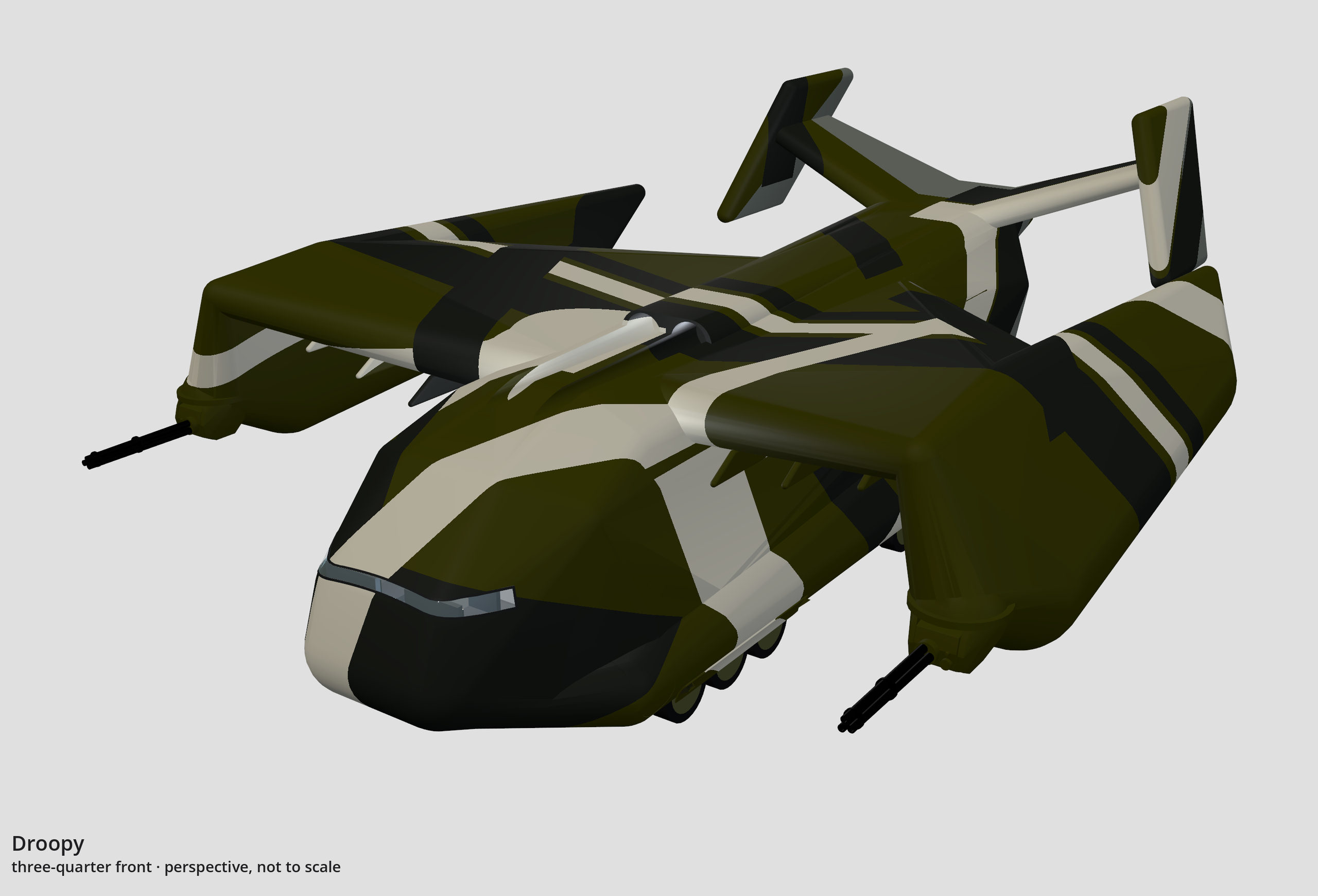
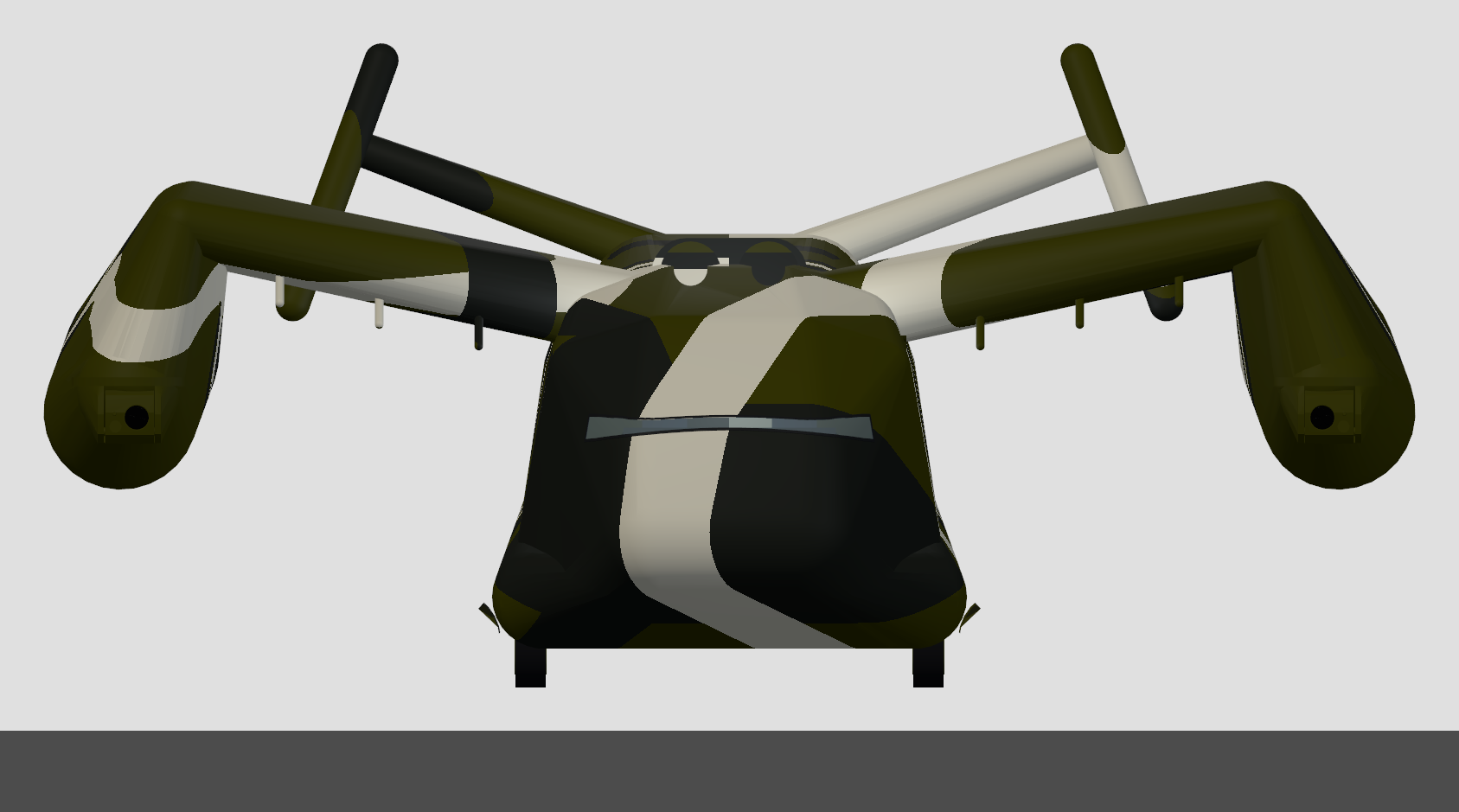
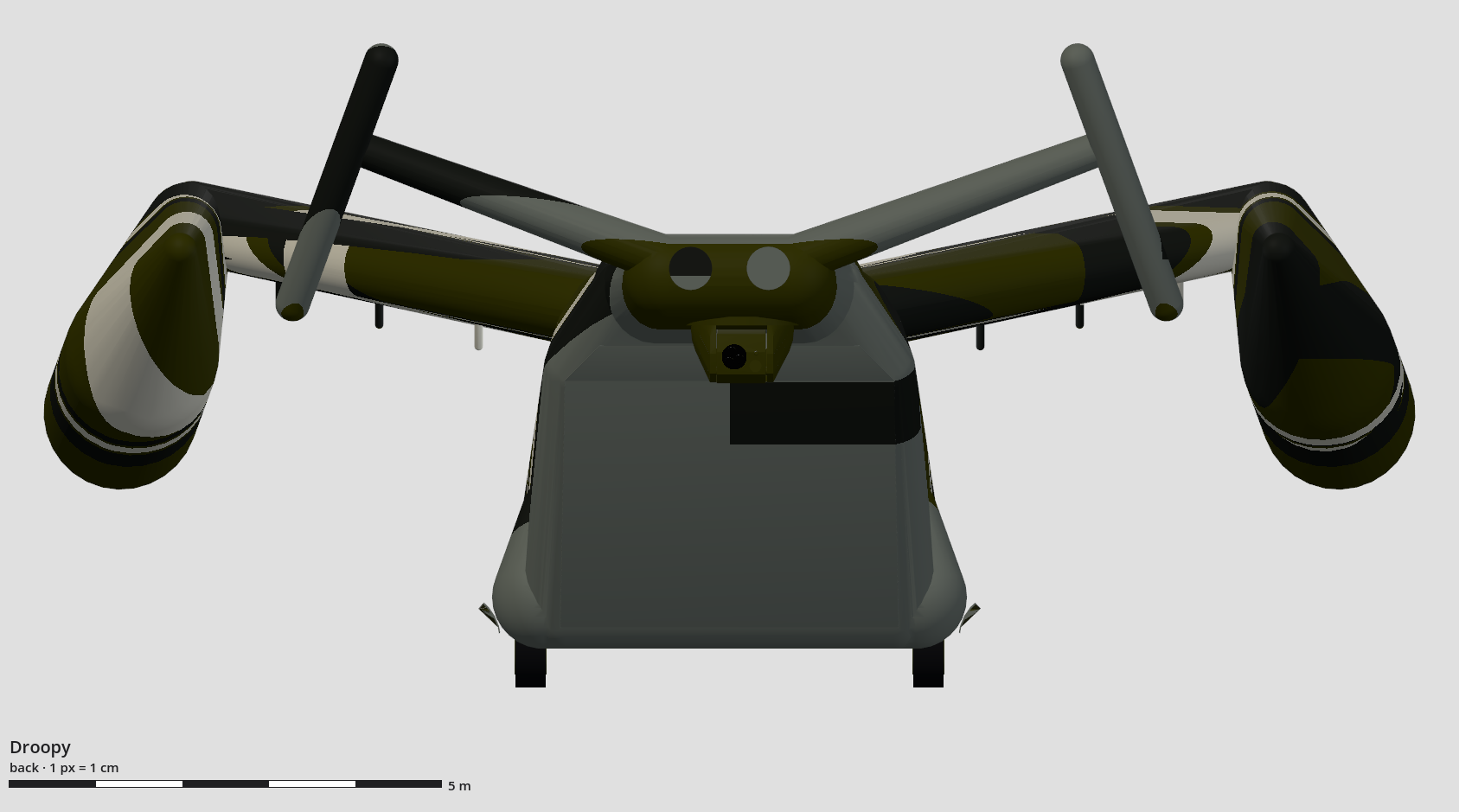
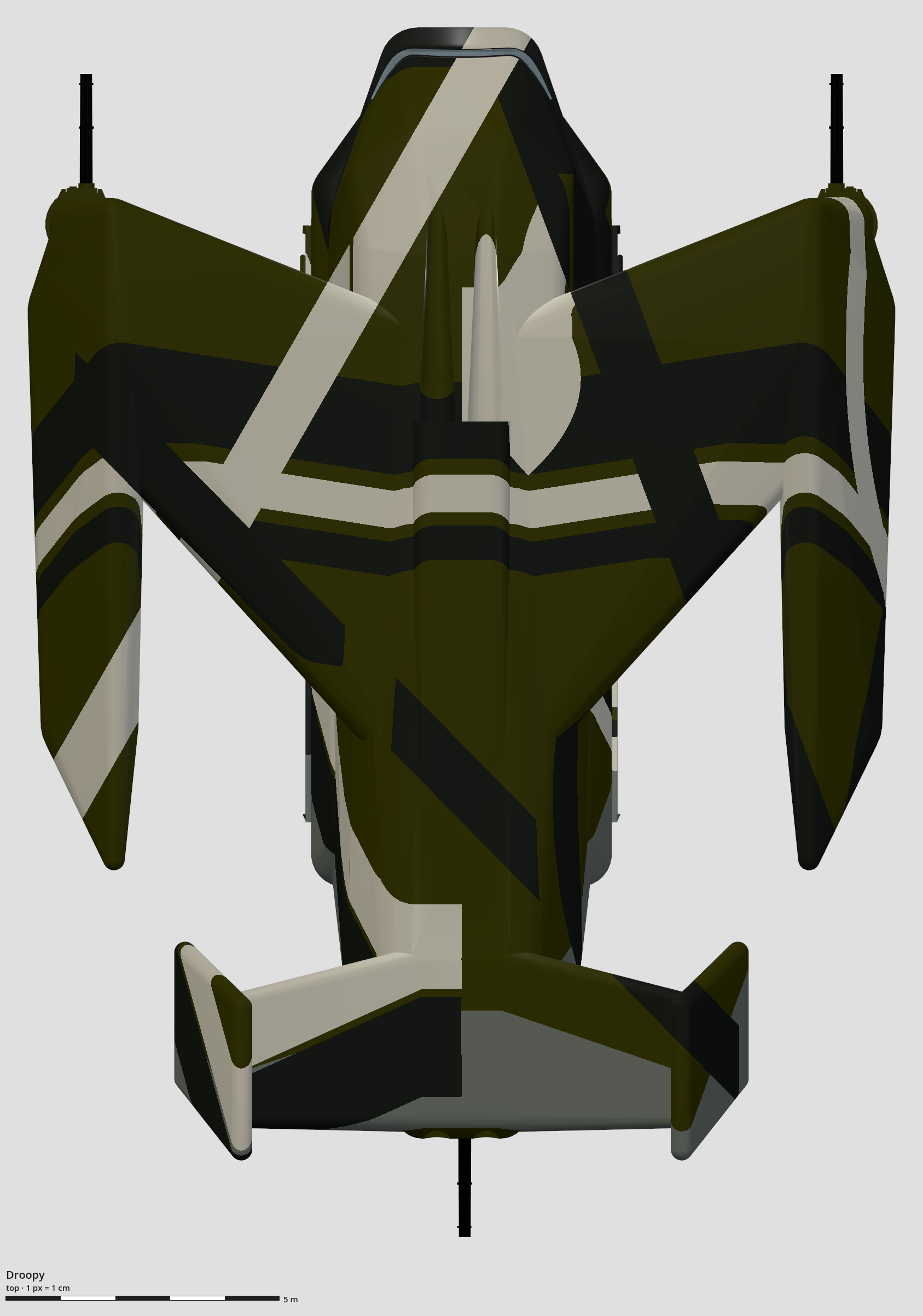
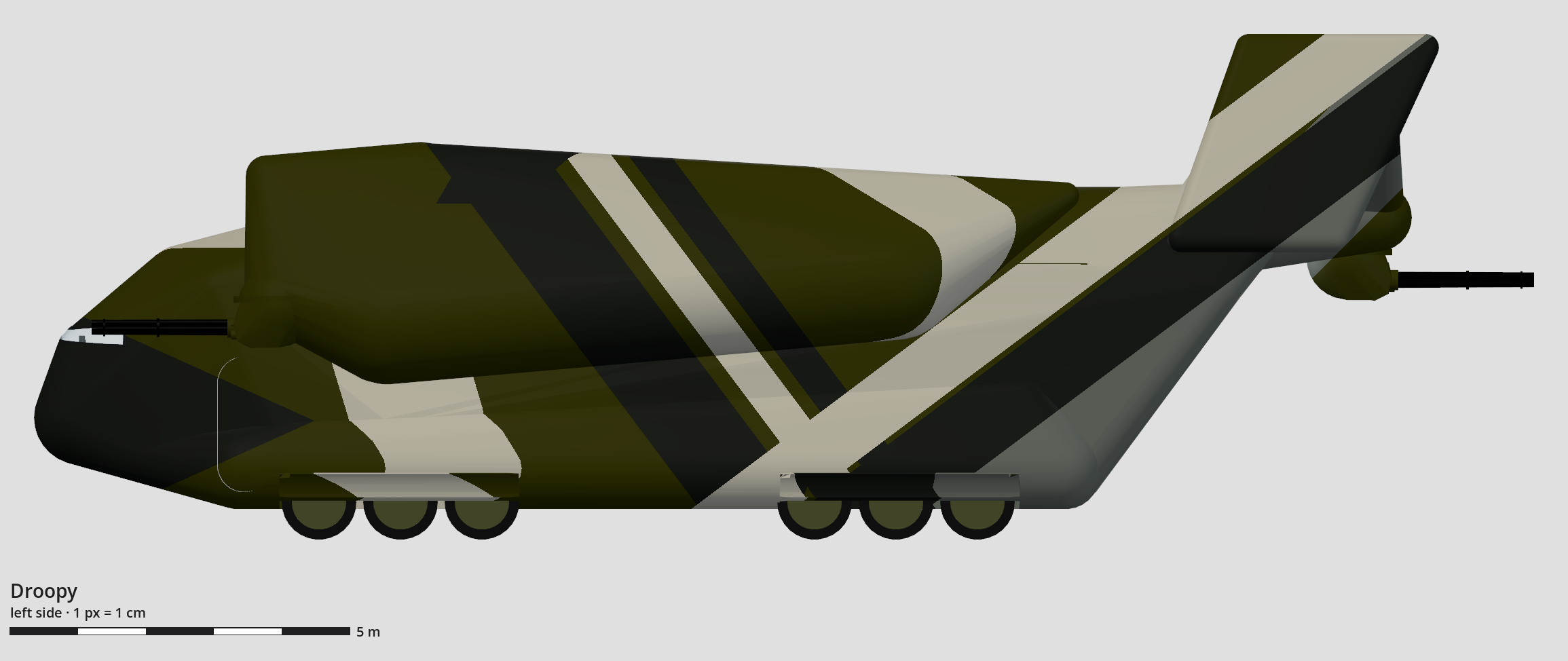
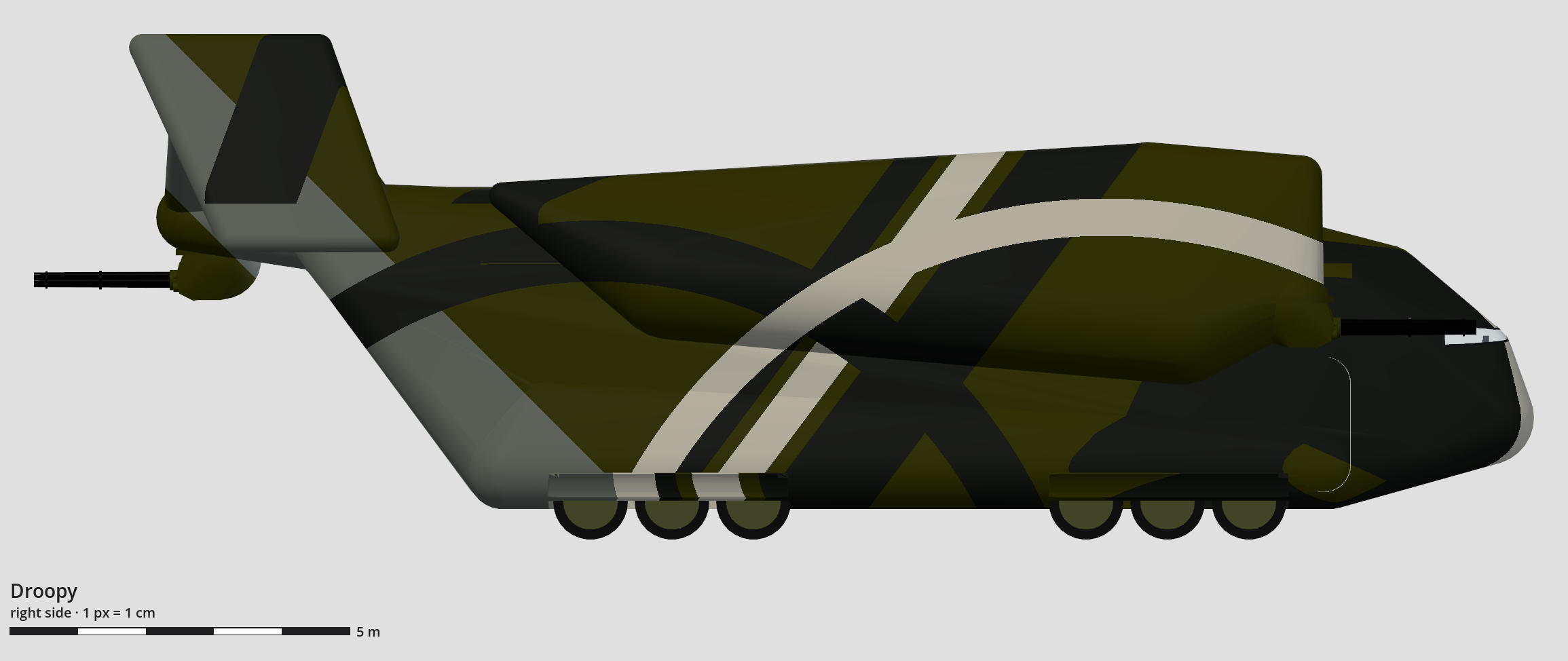
The EV-722 first flew in 2026, the first emdrive powered tactical transport. It was designed to be able to airlift either a standard forty foot shipping container, with room for personnel on either side or to fit the Leopard 2A8 (just) which was the largest Main Battle Tank in European service at the time. There were teething problems and the program was almost cancelled multiple times, but it led to a heavy-lift, orbital transport capability that made it possible to move heavy units at a scale that had been unimaginable with conventionally powered aircraft.
The most common version in use in 2095 is the Mark 27 with a maximum take off weight of 215 tonnes. It is the workhorse of the EUAF, both as its primary logistics asset and as the main tactical transport.
There are variants too, including a heavy lift (mk28) with an all up weight of 1250 tonnes and a deep space/special operations version (mk29) which has increased vacuum endurance using a small GT-MHR reactor.
The transparent view above shows pilot seating, the placement of the four gimballed emdrives and the size of the cargo bay.
| Designation | EV-722 “Oie”, Mark 27 |
| Role | Tactical transport and dropship |
| Length | 22.1 m |
| Wingspan | 15.86 m |
| Height | 7.45 m, gear down |
| Mass empty | 45 t |
| Payload | 170 t (est.) |
| Maximum take-off | 215 t |
| Crew | Three: two pilots, the commanding pilot in the right-hand seat and the co-pilot in the left, and a loadmaster in the cargo bay; folding troop seats along the hold walls |
| Hold | 12.8 m long, 3.9 m wide at the floor, 3.35 m high at the ridge |
| Drives | Four gimballed Shawyer EM drives in the wing-tip pods, powered by hydrogen turbines, limited battery capacity and fuel cells. |
| Speed in atmosphere | Mach 0.97; the lifting body generates upforce from about 73 m/s empty, 123 m/s laden |
| Hover | 144 km/h (40 m/s) manoeuvring, climbing at 28 m/s |
| Speed in space | A constant 0.3 g acceleration, no top speed |
| Armament | Three remote-controlled 30 mm L70 gatlings: two on the front of the wing-tip nacelles, one in the tail; slaved to the pilot’s helmet view; 80° of depression, so all three can fire at a target beneath her; 2,400 rounds a minute (est.) Six hardpoints for extra LH2 or bombs, missiles, drones or rocket pods. |
| Range | Damage out to 3,000 m, best within 2,000 m |
| Point defence | The same gatlings, against missiles and drones |
Technical drawings